
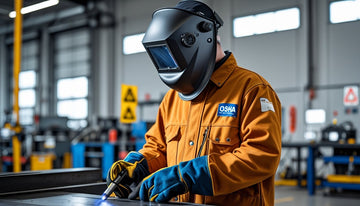
OSHA FR clothing requirements are essential for protecting welders from burns, arc flash, and fire hazards. Understanding these regulations ensures compliance and prevents serious injuries from sparks, molten metal, and electrical hazards.
This guide breaks down OSHA standards (29 CFR 1910.132 & 1910.252) to help you choose the right FR (Flame-Resistant) clothing.
Optimize Safety: Meet compliance with our FR flame-resistant work pants, designed for welding safety and all-day comfort.
OSHA Standards for Welding Protective Clothing

OSHA regulates welding safety through two primary standards to mitigate burns and flash fires. Requirements vary based on specific workplace hazard assessments.
1. OSHA 1910.132: General PPE Requirements
This standard requires employers to perform a hazard assessment before selecting PPE. Key obligations include:
- Identifying physical and contact hazards.
- Providing certified PPE to employees at no cost.
- Mandatory training on proper use, maintenance, and limitations of gear.
2. OSHA 1910.252: Welding, Cutting, and Brazing
Specifically targeting thermal risks, 29 CFR 1910.252(b)(3) dictates that "appropriate" gear must be used based on the size and location of the welding task. Protective clothing must match the real-world risks faced by the crew.
When is FR Clothing Mandatory?
FR clothing is mandatory if assessments identify:
- Flash fire risks or jet flames.
- Short thermal exposures or oxygen-fed blazes.
- Situations where engineering controls cannot eliminate the hazard.
Key FR Clothing Industry Standards (NFPA & ASTM)

Welders must ensure their gear meets these three critical safety benchmarks:
- NFPA 2112: Protection against flash fire; fabric must self-extinguish within 2 seconds.
- NFPA 70E: Electrical safety and Arc Flash protection (measured by ATPV).
- ASTM F1506: Standards for textile materials used in arc-rated clothing.
Pro Tip: Protect your upper body with FR welding jackets that meet these rigorous industry standards.
Choosing Compliant FR Clothing by Welding Type

| HRC Level | Min Arc Rating (cal/cm²) | Typical Tasks |
|---|---|---|
| HRC 1 | 4 cal/cm² | Light welding |
| HRC 2 | 8 cal/cm² | Standard arc welding |
| HRC 3 | 25 cal/cm² | Heavy industrial welding |
| HRC 4 | 40 cal/cm² | High-voltage work |
Crucial Rule: OSHA prohibits melting synthetics like polyester or nylon. Always use treated cotton or leather.
Explore our full line of certified FR welding clothes for guaranteed compliance.