
Noticias

OSHA FR Clothing Requirements for Welders: Compliance Guide

Dec 25, 2025

osha fr clothing requirements

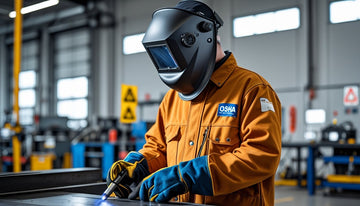
OSHA FR clothing requirements protect welders from burns, arc flash, and fire hazards on the job. Understanding these regulations helps you stay compliant and avoid serious injuries from sparks, molten metal, and electrical hazards.

OSHA mandates specific protective clothing standards based on your welding type and workplace hazards. Non-compliant gear puts you at risk for burns and creates liability issues for your employer.

Knowing which OSHA standards apply to your work ensures you wear the right protection. This guide breaks down the requirements so you can choose FR clothing that keeps you safe and meets regulatory standards.

Meet OSHA compliance requirements with our FR flame-resistant work pants designed for welding safety and all-day comfort on the job.

OSHA Standards for Welding Protective Clothing

OSHA covers welding protective clothing with two main standards that work together to keep workers safe from burns, sparks, and flash fires. What’s required depends on your specific workplace hazards and the kind of welding you’re doing.

OSHA 1910.132 and PPE Requirements

The general PPE rule—29 CFR 1910.132—lays the groundwork for all protective gear at work. You’re supposed to do a hazard assessment before picking any protective clothing or equipment for welders.

During this assessment, you need to spot hazards that could injure workers through physical contact or exposure. You’ve got to write this down and certify that you actually checked for hazards.

Once you know your risks, pick PPE that really protects against them. You have to give this gear to employees for free. Training matters too—show workers when to use PPE, what to use, how to wear it, and how to take care of it.

OSHA 1910.252 Welding, Cutting, and Brazing Standards

The welding-specific rule—29 CFR 1910.252(b)(3)—says workers exposed to hazards from welding, cutting, or brazing must get personal protective equipment that fits the requirements in 1910.132.

What counts as “appropriate” gear changes based on the size, type, and location of your welding work. You have to look at each situation and figure out what’s really needed for protection.

Your protective clothing choices have to fit the real risks your crew faces on the job.

When FR Clothing is Mandatory vs Recommended

FR clothing isn’t optional if your hazard assessment finds flash fire risks or short thermal exposures—think jet flames, liquid or solid fires, and oxygen-fed blazes.

If you’ve managed to get rid of flash fire hazards with engineering or admin controls, then you don’t have to require FR clothing for that work. OSHA only expects you to provide FR clothing when those hazards are actually there.

For typical welding jobs without flash fire risks, heavy cotton or leather gear might be enough. Just be sure you document why your chosen protection is good enough for the hazards your welders face.

FR Clothing Standards Welders Must Meet

Welders deal with real thermal hazards, so their clothing has to meet certain industry standards. Three big ones matter: NFPA 2112 for flash fire, NFPA 70E for arc flash and electrical safety, and ASTM F1506 for arc-rated clothing.

NFPA 2112 Flash Fire Protection Requirements

NFPA 2112 sets the rules for flame-resistant gear that protects against flash fires. The clothing has to self-extinguish within two seconds after you remove the flame. It can’t melt or drip onto your skin, either.

Garments have to pass tough thermal protection tests, including manikin tests that mimic real flash fire conditions. The gear needs to stop second and third-degree burns across key body areas.

NFPA 2112 kicks in when you’re working where flash fires could break out from flammable gases, vapors, or liquids. Welding in oil and gas facilities usually means you need this level of protection. It’s up to your employer to check for flash fire hazards before picking FR gear.

NFPA 70E Arc Flash and Electrical Safety

NFPA 70E covers arc flash protection for welders dealing with electrical hazards. Employers have to do arc flash risk assessments and figure out the right Arc Thermal Performance Value (ATPV) for your job. ATPV measures how much heat FR fabric can block before you’d get a second-degree burn.

You need FR clothing with an ATPV that matches or beats the possible arc flash energy at your worksite. NFPA 70E also breaks jobs into hazard risk categories (HRC) from 0 to 4, each with a minimum ATPV for your gear.

FR clothing has to cover all skin that could get exposed. Shirts tucked in, sleeves down—no shortcuts.

ASTM F1506 Arc-Rated Garment Standards

ASTM F1506 spells out what textile materials have to do in arc-rated and flame-resistant clothing. It makes sure your FR gear hits minimum standards for arc thermal performance, flame resistance, and durability. All arc-rated clothing for welders has to meet ASTM F1506.

Each garment needs a label showing the ATPV or Energy Breakopen Threshold (EBT) in calories per square centimeter. That’s how you know how much arc flash energy the clothing can handle.

ASTM F1506 also says your gear has to keep protecting you through lots of washes, and it bans materials that melt, drip, or fall apart in a fire or arc flash.

Protect your upper body with our flame-resistant welding jackets that meet industry safety standards for heat and spark protection.

Choosing Compliant FR Clothing

The kind of welding you do decides what flame-resistant clothing you need. Your FR gear has to meet the right arc ratings and industry standards to keep you safe and satisfy OSHA.

Required FR Garments for Different Welding Types

Your welding method matters. Arc welding is the riskiest—it brings serious heat and arc flash risks, so you need full coverage: FR shirt and pants, at least.

Gas welding and cutting aren’t as hot, but you still need FR clothing. Usually, an FR shirt does the trick for gas welding. For lighter work, FR sleeves or a jacket might be enough.

Basic FR garment requirements by welding type:

  • Arc welding: FR shirt, FR pants, leather gloves, and a welding jacket
  • MIG/TIG welding: FR shirt, FR pants, and good hand protection
  • Gas welding: FR shirt or jacket, leather gloves
  • Cutting operations: FR shirt, FR pants for overhead work

OSHA bans regular cotton, rayon, nylon, polyester, or acetate unless they’re treated to be fire resistant. Your FR workwear has to stay flame-resistant after many washes.

Arc Ratings and HRC Levels for Your Work

Arc ratings show how much heat your FR clothing can take, measured in cal/cm². Higher numbers mean more protection.

You’ll need to know your workplace’s Hazard Risk Category (HRC) to choose the right gear. HRC runs from 0 to 4, with each step needing a higher minimum arc rating.

HRC levels and required arc ratings:

HRC Level

Minimum Arc Rating

Typical Welding Tasks

HRC 1

4 cal/cm²

Light welding, short duration

HRC 2

8 cal/cm²

Standard arc welding

HRC 3

25 cal/cm²

Heavy industrial welding

HRC 4

40 cal/cm²

High-voltage electrical work

ANSI Z49.1 gives extra guidance on welding safety. Your employer should check your tasks and let you know what arc rating you need.

ARC Captain FR Clothing for OSHA Compliance

ARC Captain offers FR shirts, pants, and jackets made from flame-resistant treated cotton for welding protection. The FR fabric resists ignition from sparks and spatter while providing breathability for all-day wear in demanding shop conditions.

The treated cotton self-extinguishes when exposed to flames and won't melt onto skin like synthetic materials. Double-stitched seams and reinforced construction hold up through regular welding operations and repeated washing.

ARC Captain FR workwear provides practical features like multiple pockets, elastic waistbands, and D-rings for tool attachment. The clothing balances flame resistance with mobility and comfort during extended welding shifts.

For welding operations requiring specific arc ratings or HRC compliance, verify that protective clothing matches your facility's hazard assessment requirements and documented safety standards.

Stay OSHA-compliant with our complete line of FR welding clothes offering certified protection for every welding operation.

Conclusion: OSHA FR Clothing Requirements

OSHA FR clothing requirements protect welders from serious burns and workplace injuries. Understanding the standards under 29 CFR 1910.252 and 29 CFR 1910.132 helps you stay compliant and safe on every job.

Your employer must assess hazards and provide appropriate FR protective clothing for your welding work. Choosing certified FR garments that meet NFPA and ASTM standards ensures you get reliable protection that lasts through demanding shop conditions.

Complete your welding safety compliance with proper eye protection. Check out our guide on the best safety glasses for welding to meet OSHA requirements and protect your vision on every project.

Frequently Asked Questions: OSHA FR Clothing Requirements

OSHA doesn’t require specific FR brands, but employers have to give workers enough protection against welding hazards. The focus is on hazard assessment and picking gear that meets recognized safety standards.

Does OSHA require fire retardant clothing?

OSHA requires employers to assess workplace hazards and provide appropriate PPE based on actual risks. The general PPE standard 29 CFR 1910.132 establishes the framework for protective clothing decisions. If hazard assessments show exposure to flame, heat, or sparks, employers must provide proper flame-resistant clothing.

What are the requirements for fire retardant clothing?

FR clothing must resist ignition, self-extinguish when flames are removed, and cannot melt or drip onto skin. Garments should meet standards like NFPA 2112 or ASTM F1506 for thermal protection and flame resistance. FR clothing must maintain protective properties through repeated washing and regular use with proper certification labels.

What are the dress code requirements for OSHA?

OSHA requires clothing that protects against workplace hazards without creating additional risks. Synthetic materials like polyester or nylon that melt and cause burns are prohibited in welding environments. Clothing must cover exposed skin and avoid features like cuffs or torn fabric that trap sparks or hot metal.

Does OSHA require FR clothing for welders?

OSHA standard 29 CFR 1910.252(b)(3) requires employers to provide PPE protecting welders from job-specific hazards. Employers must conduct hazard assessments per 29 CFR 1910.132 to determine appropriate protective clothing. Most welding operations generate sufficient heat and spark exposure that FR clothing becomes necessary for compliance.