


If you mess up a weld on a garden gate, it looks bad. If you mess up a weld in a nuclear reactor, it makes international news.
Nuclear welding is widely considered the "Special Forces" of the metalworking world. It requires a level of precision, patience, and security clearance that goes far beyond the standard workshop.
Whether you are sealing fuel rods with exotic alloys or repairing a cooling pipe inside a containment dome, this career path offers some of the highest salaries—and highest risks—in the industry.
Here is everything you need to know about the certifications, processes, and reality of becoming a nuclear welder.
What Exactly is Nuclear Welding?
Nuclear welding involves joining metal components for nuclear power plants, Navy nuclear vessels (like submarines and carriers), and radioactive material storage containers.
Unlike structural welding, where strength is the main goal, nuclear welding focuses on containment. The welds must be absolutely perfect to prevent radioactive leaks.
Because of this, nuclear welders often work with "Exotic Metals" like Zirconium, Inconel, and high-grade stainless steel that require incredibly specific heat control.
Welding Machines You May Want to Shop
Explore More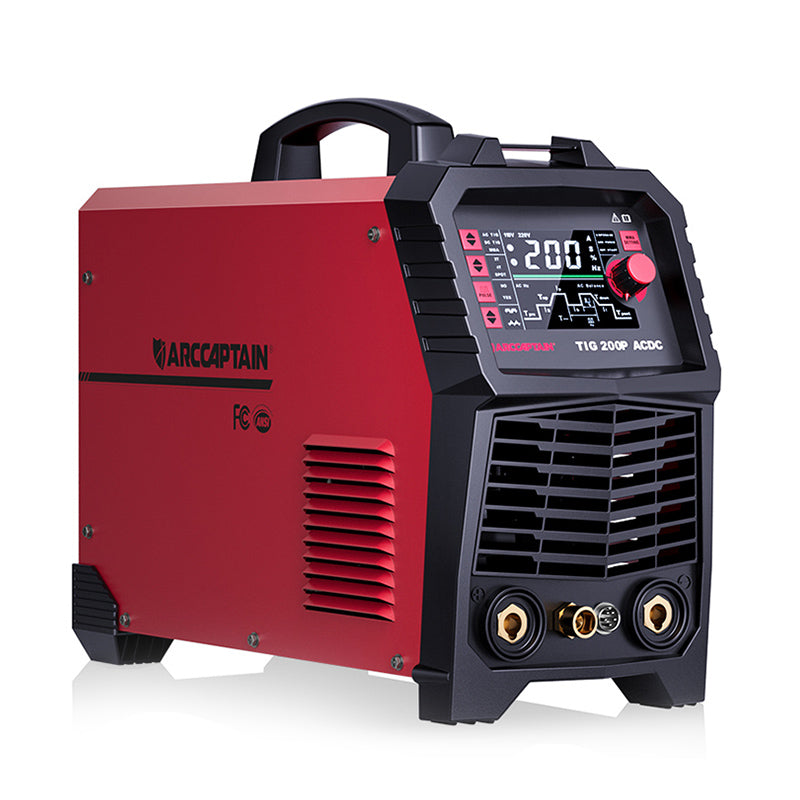


The 3 Main Processes Used in Nuclear
You won't find much "flux core" in a reactor core. Nuclear work relies on clean, precise, and slag-free processes.
1. TIG and Plasma Arc Welding
Precision is king. Most root passes on pressure vessels are done using TIG (GTAW) or plasma arc welding. These processes allow the welder to control the heat input down to the amp, ensuring the metal doesn't warp or lose its corrosion-resistant properties.
2. Stick Welding (SMAW)
Believe it or not, the old-school stick welding machines are still vital in the nuclear industry. Stick is often used for structural supports or field repairs where gas shielding might be blown away by ventilation systems. However, the "Code" requirements for these stick welds are far stricter than standard construction.
3. Automated & Robotic Welding
In areas where radiation levels are too high for humans to enter safely, the industry relies on robotic welding. Operators control these machines remotely from a safe distance, using cameras to guide the puddle.
Critical Skills You Need to Get Hired
You cannot just walk onto a nuclear site with a hood and a stinger. You need to prove you are an elite tradesperson.
- Mastery of Symbols: You will be working from complex blueprints designed by nuclear engineers. You must be able to read a weld symbol chart flawlessly to know exactly what penetration, angle, and finish is required.
- Precision Machine Settings: There is no "guessing" your heat. You need a deep understanding of voltage and amperage curves. Even if you are using a wire-fed process for structural components, you must consult a MIG welding wire speed voltage chart to ensure your settings fall within the qualified procedure range (WPS).
- Security Clearance: Because you have access to critical infrastructure, you will undergo FBI background checks, psychological evaluations, and rigorous drug testing.
The Gear: Safety Beyond the Standard
In a nuclear facility, a standard cotton shirt isn't enough. Safety protocols are intense because the hazards are invisible (radiation).
- Fresh Air Systems: Welders often wear PAPR (Powered Air Purifying Respirator) systems to prevent inhaling radioactive particulate.
- Dosimeters: You will wear a badge that tracks your radiation exposure in real-time.
- High-Grade Hoods: You need premium welding helmets with superior optical clarity (1/1/1/1 rating) because you often cannot get your head close to the weld due to restricted access or protective suits.
- Reliable Power Sources: The industry relies on stable electric welding machines that provide a smooth arc without fluctuation, as power spikes can cause micro-cracks in the alloy.
Salary Expectations: Nuclear vs. Marine
Why go through all this training? The money.
Nuclear welders are among the top 1% of earners in the trade.
- Entry Level: $60,000 - $85,000
- Experienced/Traveling: $100,000 - $150,000+
It is often compared to the maritime industry in terms of pay. If you are curious how it stacks up against shipyard work, check out our breakdown of how much does a marine welder make. Both careers require working in tight spaces and passing strict X-ray tests, but nuclear generally pays a "hazard premium" due to the security clearance requirements.
Conclusion
Nuclear welding isn't just a job; it is a discipline. It demands the steadiest hands and the sharpest mind. If you are willing to undergo the background checks and master the TIG torch, it is a career that guarantees you will always be in demand.
Frequently Asked Questions About Nuclear Welding
Is nuclear welding dangerous?
It carries unique risks, but it is highly regulated. The primary danger is not just the arc, but the potential for radiation exposure. This is why nuclear welders are subject to strict "dose limits" and must wear specialized PPE, including dosimeters and high-grade welding helmets, to monitor and block harmful rays. If safety protocols are followed, it is statistically safer than many general construction jobs.
What type of welding is used in nuclear power plants?
The most common processes are TIG (GTAW) and Stick (SMAW). TIG is preferred for the root pass of pipes because it is clean and precise. Plasma arc welding is also used for its deep penetration and focused heat control on thick stainless steel components. Flux-cored welding is rarely used inside the reactor containment due to the smoke and slag it creates.
How hard is the nuclear welding test?
It is widely considered the hardest test in the industry. You typically must pass a "6G" pipe test on heavy-wall exotic alloys (like Inconel or Monel) with zero defects allowed. The test is often performed using stick welding machines or TIG, and the finished weld is subjected to X-ray verification. Even a single pore or hairline crack will cause you to fail immediately.
Do nuclear welders get radiation poisoning?
Acute radiation poisoning is extremely rare in modern facilities due to strict safety layers. Welders often work behind lead shielding or use remote robotic arms for the "hot" zones. However, the long-term accumulation of exposure is taken seriously, which is why welders often rotate out of "hot" jobs to stay within federal safety limits.


