


Knowing how to cut rebar is an important skill for construction, metalwork, concrete reinforcement, and DIY projects. Rebar is made of strong steel, so you cannot cut it like regular metal.
You need the right tool and the right steps so the cut stays clean, safe, and accurate. If you are working on a deck, building a foundation, creating metal art, or reinforcing concrete, cutting rebar is something you will do more than once.
This guide will teach you the best tools to use, simple cutting methods, and the safety steps that keep you protected.
Key Takeaways
- Cutting rebar is easier when you use the right tool for the job. Angle grinders, bolt cutters, hacksaws, reciprocating saws, and plasma cutters all work.
- Measure and mark the bar, secure it, and cut with steady pressure.
- Wear full safety gear to protect your eyes, hands, and skin.
- Smooth the sharp edges after cutting to prevent injury.
- Choose the tool based on the rebar thickness and the number of cuts needed.
Protective Gears You May Want to Shop
Explore More

Safety Guide for Cutting Rebar
Before we talk about tools, we have to talk about safety. This is not just a disclaimer. It is the most important part of the job. Cutting rebar involves high-speed spinning discs, electricity, or extreme heat. Accidents happen fast, and they can be serious.
Eye and Face Protection
When you cut steel with an abrasive wheel, you are essentially grinding the metal away in the form of tiny, red-hot sparks. Those sparks are actually jagged pieces of metal. If one of those hits your eye, it will stick.
Do not just rely on standard reading glasses. You need ANSI-rated safety glasses that wrap around the sides of your face.
For even better protection, wear a full face shield over your safety glasses. This protects your skin from burns and keeps debris out of your mouth and nose.
Also Read: Welding Eye Injury Prevention: Tips and Best Practices
Hand and Body Protection
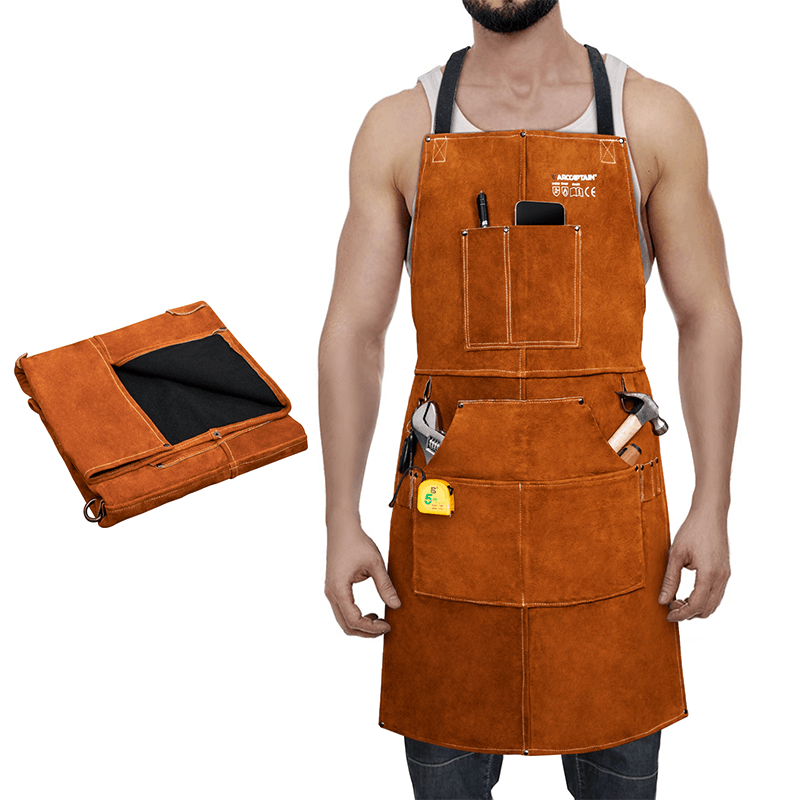
Rebar near the cut site gets incredibly hot. If you grab a freshly cut piece of steel with your bare hands, you will instantly get a second-degree burn.
Sparks can also burn through synthetic clothing like polyester, which can melt onto your skin.
- Wear Cotton or Leather: Natural fibers like cotton or wool do not melt.
- Gloves are Mandatory: You need thick leather gloves to handle the steel and protect your hands from sharp burrs on the cut edges.
Don't risk burns or cuts. Check out our Welding Protective Gear for professional-grade gloves and welding jackets that offer superior protection.
Fire Safety
Those sparks we mentioned? They can fly up to 20 feet. If you are working in a garage with sawdust on the floor or near a pile of dry leaves outside, you are at risk of starting a fire.
- Sweep your work area before you start.
- Move gas cans, oily rags, and dry wood far away.
- Keep a fire extinguisher or a garden hose nearby just in case.
Secure the Steel
Never try to hold the rebar with one hand while cutting with the other. It is a recipe for disaster. If the rebar shifts or rolls, it can bind the blade. When a blade binds, the tool can kick back violently toward your body, or the disc can shatter.
Use a heavy bench vise, C-clamps, or simply stand on the bar (safely) to keep it from moving.
Top Tools for Cutting Rebar (Pros & Cons)

Not all tools are created equal. The right choice depends on how much rebar you need to cut, how thick the steel is, and where you are working.
The Angle Grinder (Most Common)
For 90% of DIYers and home improvement projects, the angle grinder is the king. It is versatile, easy to find, and relatively inexpensive.
- Why use it: You likely already have one. It is fast enough for small to medium jobs and leaves a reasonably clean edge.
- Best for: Cutting 1 to 20 pieces of rebar.
- The Discs: You can use cheap abrasive discs (which wear down as you cut) or diamond-edged metal wheels (which stay the same size and last much longer). Diamond wheels are safer because they are less likely to shatter.
Tip: If you don't have one yet, read our full review on the Best Angle Grinder to find the right model for the job.
The Plasma Cutter (Fastest & Easiest)
If you have many cuts to make or are working with thick #5 or #6 rebar, an angle grinder will feel slow and heavy.
This is where a plasma cutter shines. A plasma cutter uses an electric arc and compressed air to instantly melt through conductive metals.
- Why use it: It cuts through thick steel like butter. There is no physical force required. You just guide the torch. It is also incredible for demolition work, where the rebar might be bent or hard to reach with a saw.
- Best for: Heavy-duty projects, thick rebar, and speed. It is also great if you need to cut rebar flush against a concrete wall.
- Versatility: Plasma cutters aren't just for rebar. They can cut sheet metal, rusty bolts, and custom shapes for automotive projects.
Related Reads:
- New to this tool? Check our Buyer’s Guide to Plasma Cutters.
- Curious about the tech? Learn How Does a Plasma Cutter Work.
- Real World Example: See how we used the ARCCAPTAIN Cut50 Plasma Cutter on a Rat Rod project to see its versatility in action.
Tip: Ready to upgrade? Browse our high-performance Welders and Plasma Cutters and Portable Plasma Cutters.
Manual Tools (Bolt Cutters & Hacksaws)
Sometimes you do not have electricity. Sometimes you are working indoors and cannot have sparks flying everywhere.
- Bolt Cutters: These are great for thin rebar (up to 3/8 inch or #3 bar). They are silent and create no sparks. However, they require significant upper body strength. Do not try to cut thick rebar with small bolt cutters. You will break the tool or hurt yourself.
- Hacksaw: This is the budget option. It works, but it is slow. Very slow. It is physically demanding. Only use a hacksaw if you only have one or two cuts to make. Be sure to use a high-tension blade designed for cutting metal (look for "bi-metal" blades).
Specialized Tools (Rebar Cutters & Chop Saws)
- Chop Saw (Cut-off Saw): This is basically a big angle grinder mounted on a hinge. It is fantastic for repetitive cuts. If you need 50 pieces of rebar cut to exactly 36 inches, this is the tool to use. It is loud and creates a lot of dust, but it is accurate.
- Hydraulic Rebar Cutter: This is a specialized tool used by pros. It looks like a power drill but has a hydraulic jaw. You slip it over the bar, pull the trigger, and snap. It cuts the bar instantly without sparks or heat. They are expensive, but they are the safest option on the market.
Step-by-Step: How to Cut Rebar Effectively
Here is exactly how to get the job done using the two most popular methods.
Method 1: Cutting with an Angle Grinder
This is the method most homeowners will use. Follow these steps for a clean, safe cut.
- Measure and Mark: Measure your rebar to the desired length. Mark the cut line clearly. Pencil marks are hard to see on dark, rusty steel, so use a piece of chalk, a white paint marker, or even a piece of masking tape.
- Secure the Bar: Clamp the rebar tightly in a bench vise. If you are working on the ground, use C-clamps to secure it to a sawhorse or a heavy pallet. Ensure the piece you are cutting off (the "drop") is free to fall. If you support both ends of the bar, the cut will close up as you finish, pinching the blade and causing kickback.
- Position the Guard: Rotate the safety guard on your grinder so that it is between your face and the cutting wheel. This deflects sparks and debris away from you.
- The Cut: Plug in the grinder and turn it on. Let it reach full speed before you touch the metal. Approach the rebar straight on. Apply steady, moderate pressure. Do not push too hard! Let the abrasive wheel do the grinding. Pushing too hard wears out the motor and shatters discs.
- Cooling: Once the cut is finished, let the metal cool down before touching it. The ends will be razor-sharp, so use the flat side of the grinding wheel (or a file) to deburr the edge quickly.
Method 2: Cutting with a Plasma Cutter
If you have access to a plasma cutter, this will be much faster.
- Setup: Connect your plasma cutter to the air compressor and power outlet. Ensure you have the right consumables (nozzles and electrodes) installed in the torch. Running low? Stock up on Plasma Cutter Consumables before you start.
- Grounding: Attach the ground clamp directly to the rebar you are cutting. If the rebar is very rusty, use a wire brush to clean a small spot for the clamp to ensure a good electrical connection.
- Safety Check: Ensure you are wearing a welding shade or dark safety glasses designed for plasma cutting (usually Shade 5). Standard sunglasses are not enough.
- The Cut: Hold the torch tip just above the mark (or lightly dragging if you have a drag shield). Squeeze the trigger to start the arc. Move the torch steadily across the bar. The arc will blow the molten metal away, instantly severing the bar. Watch your feet! Molten metal drips down.
Expert Tips & Common Mistakes
We scoured industry forums and Reddit communities like r/Welding and r/Construction to find the best advice from people who do this every day.
- Mistake: Forcing the Blade. One user on Reddit noted, "Let the RPMs do the work. Pushing too hard just heats up the disc and makes it shatter." If you hear the grinder motor bogging down (lowering in pitch), you are pushing too hard. Back off and let the speed recover.
- Tip: The "Notch and Snap" Technique. You do not always have to cut all the way through. If you are working with thick rebar and want to save time (and blade life), cut about 3/4 of the way through the bar. Then, slip a long steel pipe over the end of the bar and bend it. The remaining steel will snap cleanly. This is a great trick if you are running low on cutting discs.
- Tip: Cutting Flush to Concrete. If you have old rebar sticking out of a foundation wall that needs to be removed, an angle grinder can be awkward because the handle hits the wall. A plasma cutter is superior here because the torch can get right up against the concrete. Alternatively, a reciprocating saw with a flexible blade can bend flush to the wall for a clean cut.
- Tip: Managing Sparks. If you are cutting inside a finished room, have a helper hold a shop vac hose near the cut (but not too close!) to suck up the dust. Alternatively, use a piece of wet cardboard as a backstop to catch the sparks so they do not burn your flooring.
Conclusion
Cutting rebar does not have to be a headache. It is just a matter of matching the right tool to the job.
If you are just cutting a few pieces for a garden project, a simple hacksaw or bolt cutter might be all you need. For the average DIY renovation, the trusty angle grinder is your best friend. It is cheap, effective, and gets the job done.
But if you are tackling a major foundation repair or a large artistic project, stepping up to a plasma cutter will save you hours of time and save your body from fatigue.
No matter which method you choose, respect the metal. Rebar is hard, heavy, and unforgiving. Always prioritize safety. A $5 pair of safety glasses is infinitely cheaper than a trip to the emergency room for an eye injury. Take your time, secure your workpiece, and keep your cool.
Plasma Cutters You May Want to Shop
Explore More


Cutting Rebars FAQs
Cutting rebar requires the right tools, accurate measuring, and proper safety steps. Each method varies in speed, precision, and effort, depending on the rebar’s thickness and the equipment you use.
What are the best tools for cutting rebar effectively?
You can use an angle grinder, reciprocating saw, or chop saw to cut rebar quickly and cleanly. An angle grinder with a metal or diamond cutting wheel works well for small to medium jobs because it offers precision and control. For larger projects, a power saw or rebar cutter and bender is more efficient. Power saws like chop saws or circular saws, with the correct metal-cutting blade, can handle long or thick rebar pieces with less physical effort.
What is the hardest grade of rebar to cut?
Most residential rebar is Grade 40 or Grade 60. The number represents the tensile strength (60,000 psi). Grade 60 is harder and tougher to cut than Grade 40. There are higher grades like Grade 75 or Grade 100 used in bridges and skyscrapers. If you encounter these high-tensile steels, manual tools like bolt cutters will be useless. You will need a chop saw or a plasma cutter to handle high-grade steel efficiently.
What is the fastest way to cut rebar?
The fastest way to cut rebar is to use an angle grinder with a metal cutting disc. It cuts quickly, works on different rebar sizes, and is easy to control. Many builders prefer it because it makes clean cuts in seconds and does not require heavy equipment. For safe results, always clamp the rebar and wear protective gear while cutting.
Is it safe to cut rebar with a torch?
Yes, an oxy-acetylene torch is a classic way to cut rebar. It works well and is very portable since you do not need electricity. However, it is generally slower than a plasma cutter for small bars, and it introduces a massive amount of heat. If you are cutting rebar that is already embedded in concrete, the high heat from a gas torch can cause the moisture inside the concrete to expand and crack the concrete (spalling). Plasma is generally safer for the surrounding concrete because the heat affected zone is smaller.


