


Oxy Acetylene Welding Regulators
- En vedette
- Le plus pertinent
- Meilleures ventes
- Alphabétique, de A à Z
- Alphabétique, de Z à A
- Prix: faible à élevé
- Prix: élevé à faible
- Date, de la plus ancienne à la plus récente
- Date, de la plus récente à la plus ancienne
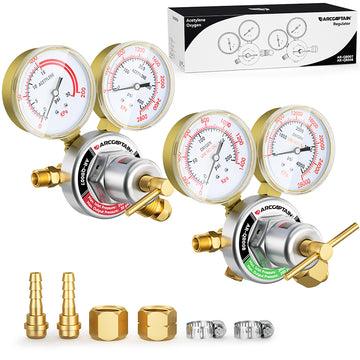
Oxy acetylene welding regulators are the heart of safe and effective gas welding and cutting. At ArcCaptain, we offer robust, reliable regulators designed to give you precise control over oxygen and acetylene flow.
Whether you're working on metal fabrication, HVAC repairs, or artistic metalwork, our regulators ensure smooth gas delivery for clean, consistent welds and cuts every time. Experience safety, accuracy, and durability all in one package with ArcCaptain’s oxy acetylene welding regulator collection.
Get the Perfect Gas Flow for Every Welding Job
Controlling your gas pressure means controlling your weld quality. Our oxy acetylene regulators are built to make that control easy and exact.
- Dual gauges let you monitor cylinder pressure and working pressure at a glance
- Solid brass bodies resist corrosion and provide long-lasting durability
- Compatible with standard CGA540 and CGA510 fittings for wide usability
Easy to Adjust for Any Task
Adjusting gas flow is simple and smooth, so you can quickly dial in the right pressure for welding, cutting, or brazing. This means less downtime and better results on every project.
Built Tough to Handle the Demands of Welding and Cutting
Welding regulators need to withstand rough conditions without losing accuracy or safety. ArcCaptain regulators are designed with this in mind.
- Heavy-duty construction ensures reliability under high pressure
- Built-in safety features protect against leaks and overpressure
- Compact design fits easily into your welding setup without clutter
Dependable for Professionals and Hobbyists
Whether you’re a seasoned welder or just getting started, these regulators offer peace of mind and consistent performance, so you can focus on your craft without worrying about equipment failure.
Ready to Use Right Out of the Box
Our regulators come as complete kits with everything you need to get started immediately.
- Includes hose barbs, clamps, and easy-to-follow instructions
- Compatible with most oxygen and acetylene cylinders and torch kits
- Designed for quick installation and secure connections
Save Time with a Complete Setup
No need to hunt for parts or guess compatibility. ArcCaptain’s oxy acetylene welding regulator kits are thoughtfully packaged to get you welding or cutting faster.
Explore More Welding Essentials from ArcCaptain
- Stick Welding Equipment – Durable machines and accessories for tough welding jobs.
- Tools for Welders– Precision tools designed to make your welding work easier.
- Welding Safety Equipment– Gear that keeps you protected while you work.
- Welding Protective Gear– Comfortable and reliable protection for every welder.
Frequently Asked Questions About Oxy Acetylene Welding Regulators
What should my oxy-acetylene regulator be set at?
The regulator settings depend on your specific welding or cutting task. Typically, oxygen pressure ranges from 20 to 40 psi for welding, while acetylene is set between 5 to 15 psi. Always refer to your torch manufacturer’s recommendations and adjust for clean, stable flames without excess noise or soot.
What is the 1/10 rule for acetylene?
The 1/10 rule means the acetylene cylinder pressure should never exceed 10 psi, which is one-tenth of the cylinder’s capacity. This rule is vital because acetylene becomes unstable and potentially explosive above this pressure, ensuring safety during welding and cutting operations.
What should a welder do before attaching a regulator to an oxygen cylinder?
Before attaching a regulator, always check that the cylinder valve is fully closed and inspect the regulator and hoses for damage or dirt. Open the cylinder valve slightly to blow out any dust or debris before fully opening it. This prevents contamination and ensures a safe, leak-free connection.
Do you turn on oxygen or acetylene first?
Always open the acetylene valve first, followed by the oxygen valve when lighting your torch. When shutting down, close oxygen first, then acetylene. This sequence helps prevent flashbacks and ensures safe operation.
